• CALL 1300 002 484
  • Email Us >>
  • Skip to primary navigation
  • Skip to main content
  • Skip to primary sidebar
Citi Industries

Citi Industries

Email Us
  • Services
  • Products
  • Resources
  • Case Studies
  • About
  • Contact
    • Wash Bay Construction FIND OUT MORE
    • Grease Trap Installation FIND OUT MORE
    • Grease Trap Lid Installation FIND OUT MORE
    • Plumbing Installation FIND OUT MORE
      • Storm Water Installation FIND OUT MORE
      • Hot Water Systems FIND OUT MORE
      • Gasfitting FIND OUT MORE
      • Backflow DevicesFIND OUT MORE
      • Commercial Plumbing FIND OUT MORE
      • Industrial Plumbing Design FIND OUT MORE
    • Plumbing Design FIND OUT MORE
  • Grease Trap RangeFIND OUT MORE
    • Above Ground CHECK SIZES
    • Below Ground CHECK SIZES
    • LID REPLACEMENT FIND OUT MORE
    • Regulations FIND COUNCIL RULES
    • Pumps CHECK SIZES
    • Septic Tanks GET A QUOTE
  • Pump Stations FIND OUT MORE
    • Sewer Pump Stations CHECK SIZES
    • Storm Water Pump Stations CHECK SIZES
    • Diaphragm Pumps CHECK SIZES
  • Oil Water Separators CHECK SIZES
  • Holding Tanks CHECK SIZES
  • Grease Trap Lids CHECK SIZES
  • Grease Trap Regulations FIND OUT MORE
  • News & Insight FIND OUT MORE
  • About
  • Wash Bays
    • Oil Water Separators
    • Sewer Pump Stations
    • Diaphragm Pumps
    • Bunding
    • Wash Bay Design
  • Grease Traps
    • Above Ground
    • Below Ground
    • Lid Repairs
    • FIND COUNCIL RULES
    • Pumps
    • Septic Tanks
  • Plumbing
    • Commercial Plumbing
    • Industrial Plumbing
    • Stormwater
    • Hot Water
    • Gasfitting
    • Backflow Devices
    • Plumbing Design
  • Case Studies
  • Contact
  • Services
  • Products
  • Resources
  • Case Studies
  • About
  • Contact

Case Wash Bays

Wash Bay Construction in Acacia Ridge, QLD

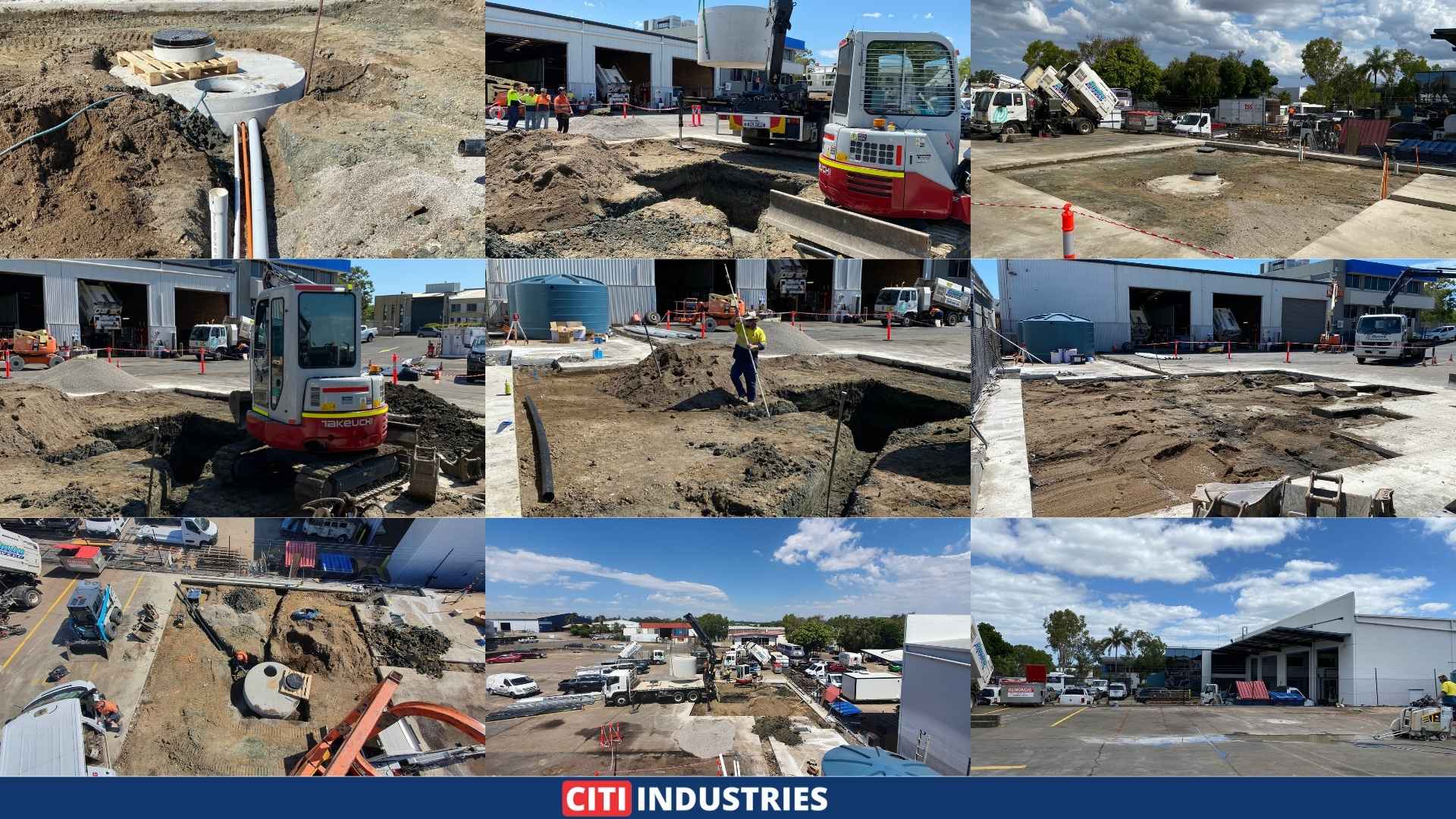
A wash bay lives or dies on what sits beneath it, and that groundwork is rarely simple. An industrial services depot in Acacia Ridge needed a new wash bay built into its existing yard. Before any wash bay could function, the site required heavy civil works, underground tanks, and a fresh sewer connection.

So, the depot engaged Citi Industries to deliver the wash bay site works on a do and charge basis. The job was earthworks first, plumbing second, with everything readied for the concrete to follow.

Project Overview

This wash bay construction project focused on preparing the site rather than the finished slab. The brief covered demolition, excavation, tanks, pits, and the trade waste connections that tie them together. Because a wash bay must capture and direct dirty water, the underground system matters more than the surface.

The team cleared a large concrete area, shaped the ground, and set up the drainage that a compliant wash bay needs. Each stage left the site ready for the concrete works ahead.

Key scope items included:

  • Concrete scanning and cutting across the work area
  • Removal of all concrete over a 10mx10m footprint
  • Disposal of the old concrete off site to a refuse centre
  • Full earthworks and ground preparation for the tanks and pits
  • Trade waste pipework connecting all tanks and pits
  • A new sewer connection line to the approved point behind the wash bay
  • Removal of all excess spoil off site

Challenges

A wash bay handles water loaded with dirt, oil, and grit from vehicles and equipment. That runoff cannot flow to stormwater or sewer untreated. As outlined in our guide to wash bay requirements in Australia, capture tanks and pits sit at the heart of a compliant system.

Scale was the first challenge. A full 10m by 10m slab had to come out before anything new could go in. Therefore, the team cut, broke, and carted the entire area off site. That demolition alone reshaped a working corner of the depot.

Depth and accuracy followed. The tanks and pits had to sit at set levels for water to drain into them correctly. Scanning the concrete beforehand revealed buried services, which kept the cutting safe.

Key constraints on this project:

  • A 10mx10m concrete area required full removal and off-site disposal
  • Tanks and pits needed precise ground levels for correct drainage
  • Concrete scanning preceded cutting to protect any buried services
  • A new sewer line had to reach the approved point behind the wash bay
  • All spoil and old concrete had to leave the site cleanly
Solutions

Citi Industries worked the project in clear stages, from demolition through to a compacted, concrete-ready surface. Each phase set up the next.

Concrete Removal and Scanning

To begin, the crew scanned the existing slab to locate any services underneath. With the ground mapped, they cut the concrete and removed the full 10m by 10m area. Every load then went off site to a refuse centre.

Scanning first is not a formality, since an unseen pipe can turn a clean cut into an expensive strike. This careful start protects the site and the schedule alike.

Earthworks and Ground Preparation

Next, the team carried out the earthworks to shape the ground for the new system. They excavated to suit the tanks and pits, setting the levels each component needed. Meanwhile, the crew removed excess spoil off site to keep the work area clear.

Good earthworks decide whether a wash bay drains properly later. Consequently, the team treated this stage as the foundation of the whole build.

Tanks, Pits and Trade Waste Pipework

Then came the underground plumbing. The crew installed the trade waste pipework that links all the tanks and pits together. These vessels capture wash water and let solids and contaminants settle out before discharge.

Connecting them correctly is what makes a wash bay compliant. The work followed Queensland regulated plumbing work requirements, so the trade waste system met the standard from the ground up.

Final Outcome

A cluttered slab became a prepared, compliant base for a new wash bay. Citi Industries completed the Acacia Ridge site works in December 2025, leaving the depot ready for its concrete pour. As a result, the underground tanks, pits, and sewer connection were all in place and connected.

  • A full 10m by 10m slab removed and disposed of off site
  • Tanks and pits set at correct levels with trade waste pipework connected
  • A new sewer line run to the approved point behind the wash bay
  • Ground compacted and prepped, ready for the concrete works to follow

Because the system was built to trade waste and plumbing standards, the depot holds a wash bay base it can rely on. The clean, compacted site also gave the concrete crew a sound platform to finish on.


Final Thoughts & Next Steps

A wash bay is only as good as the works hidden beneath it. The tanks, the pits, and the falls all decide whether wash water is captured or lost. However, getting that underground stage right takes proper civil works, not shortcuts.

Citi Industries handles wash bay projects from demolition through to a concrete-ready base. Because of that, operators avoid drainage faults that surface long after the slab is poured. The team scans, excavates, connects, and compacts to a standard the finished bay can depend on.

If your depot or yard needs a new wash bay, the team can plan the civil and plumbing works together. Discuss your wash bay project and we will map the tanks, pits, and trade waste from the ground up.

Call Citi Industries on 1300 002 484 to discuss your project.

Industrial Washbay and Oil Water Separator Installation in Carole Park, QLD

Washbay drainage system installation underway at an industrial vehicle maintenance facility in Carole Park Queensland, showing excavation and groundworks for collection pit and holding tank.

Industrial sites that operate vehicle wash pads cannot afford to cut corners on waste water management. Wash pad runoff containing oils, hydrocarbons, silt, and cleaning chemicals must be captured, treated, and discharged compliantly before it reaches the sewer or stormwater network. Without the right infrastructure in place, that runoff becomes an environmental liability and a regulatory problem that compounds every day it goes unaddressed.

That was the situation at an industrial vehicle maintenance facility in Carole Park, Queensland. The site needed a complete wash bay drainage system installation built from the ground up, one that could capture wash pad runoff, retain and settle waste water, process it through an oil water separator, and connect compliantly to the approved sewer. Nothing existed on site. Everything had to be designed, excavated, installed, and commissioned as a single integrated system.

Citi Industries was engaged to deliver exactly that.

Industrial washbay plumbing installation showing internal drainage works, trade waste pipework connections, and wastewater system components at a vehicle maintenance facility in Carole Park Queensland.

Project Overview

This was not a single-component installation. The facility required a fully integrated vehicle wash bay waste water system covering collection, retention, treatment, automated control, and sewer connection, all working together as one compliant and operational system.

The scope was substantial. Ground preparation and earthworks had to be completed before any tanks or pits could be installed. Trade waste pipework had to connect every component in the correct sequence. The oil water separator had to be configured to process waste water from the holding tank before treated water was discharged to the sewer. And a control panel had to automate the entire operation so the system could run without constant manual intervention.

Key project objectives included:

  • Installation of a 600mm collection pit with lift out silt basket and Class D grate to capture wash pad runoff
  • Installation of a 5,000 litre concrete holding tank with Class D sealed lid for waste water retention and silt settling
  • Oil water separator installation – a 3,000 litre OWS package with 2,280 litre per hour diaphragm suction pump and control float switch
  • X3 control panel installation to automate and manage system operation
  • All earthworks and ground preparation for tanks and pits
  • Trade waste plumbing installation connecting all tanks and pits
  • Sewer connection to the approved location in front of the existing sewer line
  • Backfilling of all excavated areas with basic compaction
  • Removal of excess spoil from site
  • Installation of a 20mm RPZD backflow prevention valve on the pressure washer water supply

Challenges

Industrial vehicle wash pads generate a consistent stream of contaminated waste water. Every wash cycle produces oils, hydrocarbons, silt, and detergents, and operators cannot discharge any of these directly to the sewer or stormwater network without pre-treatment.

Queensland regulations require industrial vehicle maintenance operations to manage wash bay wastewater through approved pre-treatment systems before discharge. As the environmental guidelines for wash bay waste water outline, waste water from industrial operations must meet acceptable standards before it can enter the sewer network. For sites running regular vehicle washdowns, that means having a compliant wash bay waste water treatment system in place before operations begin.

At this facility, the absence of any dedicated infrastructure meant every wash cycle was generating unmanaged runoff with no compliant pathway to the sewer. The risk was real and the consequences of continuing without a system in place were significant.

Key issues the project had to resolve included:

  • No dedicated collection system for wash pad runoff
  • No holding capacity for waste water retention and silt settling prior to treatment
  • No oil water separator to remove hydrocarbons and contaminants before sewer discharge
  • No automated control system to manage waste water processing
  • No approved sewer connection for treated waste water discharge
  • No backflow prevention on the pressure washer water supply

Site Preparation and Earthworks

Before installing any tanks, the team prepared the site. Citi Industries completed all earthworks to excavate and level the installation areas for the collection pit, holding tank, and oil-water separator. After installing and connecting all components, the team backfilled and compacted all excavated areas. They also removed any excess spoil from the site. The team scheduled concrete finishing separately as a follow-on trade to finalise the surface areas around the installed infrastructure.

Six-panel site photo showing washbay drainage installation at Carole Park Queensland including concrete slab works with drainage pit, stormwater drainage channel along building wall, drainage pipework and grated pit in excavation, holding tank being set into ground, grated collection pit with connecting pipework, and vent pipes at building perimeter.

What Was Delivered

Citi Industries delivered a fully integrated vehicle wash bay waste water system covering every stage of the waste water management process from collection through to treated sewer discharge.

Collection Pit

Citi industries licensed plumbers installed a 600mm collection pit at the wash pad to capture surface runoff at the source. The pit includes a lift-out silt basket to intercept solids and debris before they enter the downstream system, along with a Class D grate rated for vehicular traffic loading. Additionally, this setup enhances system protection and ensures long-term durability under heavy use. Intercepting solids here protects the holding tank and oil water separator from premature fouling and extends the service life of the whole system.

5,000 Litre Concrete Holding Tank

The team installed a 5,000-litre concrete holding tank to receive wastewater from the collection pit. The tank features a Class D sealed lid and provides the retention volume required for silt to settle before pumping the wastewater through to the oil-water separator for treatment. As a result, giving silt time to settle at this stage significantly improves separator performance and reduces maintenance frequency across the system.

Oil Water Separator Installation

The 3,000 litre oil water separator installation is the centrepiece of the system. The system includes a 2,280-litre-per-hour diaphragm suction pump and a control float switch. It processes wastewater pumped from the holding tank, removes hydrocarbons, oils, and residual contaminants, and discharges treated water to the approved sewer connection point.

Oil water separators are a mandatory pre-treatment requirement for industrial vehicle wash bay operations where runoff contains petroleum-based contaminants. All hydraulic and drainage works associated with the installation were delivered in line with the oil water separator waste water treatment standards outlined in the Australian plumbing and drainage standards, which set minimum requirements for compliant industrial wash bay plumbing and drainage systems across commercial and industrial facilities in Australia.

Control Panel and System Automation

Citi Industries team installed an X3 control panel to automate the operation of the entire wastewater system. The panel manages the pumping and processing cycle based on waste water levels, ensuring the system operates consistently without requiring manual monitoring throughout the day. For a busy industrial facility running regular vehicle washdowns, automated system control is not a luxury. It is what makes the system practical to operate at scale.

Trade waste Pipework and Sewer Connection

All trade waste plumbing installation works were completed to connect the collection pit, holding tank, and oil water separator through to the approved sewer connection point in front of the existing sewer line. The team made every connection in the correct sequence to ensure wastewater flows correctly through each stage of the treatment process before reaching the sewer. As a result, the system maintains efficient and compliant wastewater flow throughout each stage.

Backflow Prevention

The team installed a new 20mm RPZD backflow prevention valve on the water supply connected to the pressure washer. This protects the facility’s potable water supply from contamination in the event of a pressure reversal in the system and ensures compliance with Queensland plumbing regulations for industrial drainage solutions connected to pressurised water supply lines.

Six-panel site photo showing completed washbay drainage system at Carole Park Queensland including flush-mounted collection pit with grated lid in concrete slab, oil water separator and pump system mounted to building wall, water meter on pressurised supply line, holding tank set in excavation, RPZD backflow prevention assembly, and second water meter installation.

Final Outcome

The project was completed in line with the defined scope, delivering a purpose-built wash bay drainage system installation that gives the facility a fully compliant, automated, and reliable pathway for managing wash pad waste water from collection through to treated sewer discharge.

With the new system in place, the facility now benefits from:

  • Automated system control via an X3 control panel, reducing the need for manual intervention
  • Effective separation and treatment of waste water through a dedicated oil-water separator
  • Improved environmental compliance with a fully integrated trade waste and sewer connection
  • Reliable containment and management of runoff with purpose-built collection and holding capacity

For industrial vehicle maintenance facilities, the risk of operating wash pads without a compliant waste water system is not abstract. Contaminated discharge reaching the stormwater network or sewer without pre-treatment can trigger enforcement action under Queensland’s environmental protection framework, result in significant fines, and in serious cases lead to operational shutdowns. Building the right system properly from the start is the most cost-effective way to manage that risk.

Partner With Citi Industries for Your Next Wash bay Project


If your site is running vehicle wash pad operations without a purpose-built waste water system, every wash cycle is generating risk. Whether you need a collection pit, holding tank, oil-water separator, or a complete end-to-end system built from the ground up, Citi Industries has the experience to deliver it without disrupting your operations. Moreover, the team ensures a seamless installation process while maintaining operational continuity.

  • View our industrial washbay drainage systems to see how we design and deliver compliant end-to-end wash bay infrastructure.
  • Explore our oil water separator installation services and find the right pre-treatment solution for your site’s waste water volumes.
  • Learn more about our trade waste drainage installation and how we connect wash bay systems to approved sewer networks across Queensland.

Call us on 1300 002 484 Monday to Friday, 7am to 6pm, or send us your details online and we will take it from there.

Powering Up Efficiency with JET Excavators’ Wash Bay Installation

Washbay installed image

Introduction

JET Excavators, a leading excavation company based in Logan Village, QLD, partnered with Citi Industries in 2023 to streamline their equipment cleaning process. This project involved the design, supply, and installation of a customised wash bay system.

Challenge

Prior to the wash bay installation, JET Excavators encountered challenges like:

  • Manual cleaning methods that were labour-intensive and time-consuming, impacting productivity.
  • Difficulty in thoroughly removing dirt, debris, and potentially hazardous materials from heavy machinery.
  • Inefficient use of water and cleaning solutions, leading to higher operational costs.

Solution

Citi Industries provided a comprehensive wash bay solution tailored to JET Excavators’ specific needs, including:

  • Consultation and design services to create a wash bay layout that optimises workflow and space utilisation.
  • Supplying a high-performance wash bay system equipped with features like pressure washers, containment walls, and water recycling capabilities (if applicable).
  • Expert installation of the entire wash bay system, ensuring proper functionality and compliance with environmental regulations.

Results

The wash bay project commenced in April 2023 and was successfully completed within six months, by October 2023.

Conclusion

The new wash bay at JET Excavators’ Logan Village facility offers significant advantages, including:

  • Increased efficiency in cleaning heavy machinery, reducing downtime and potentially freeing up labour for other tasks.
  • Improved cleaning effectiveness, ensuring equipment is thoroughly sanitised and free of debris for optimal performance and safety.
  • Potential reduction in water consumption and cleaning chemicals due to modern wash bay technology, contributing to a more sustainable operation.

Cars 4 Us Wash Bay Installation

Introduction

Cars 4 Us, a prominent car dealership located in Eaglefarm, QLD, partnered with Citi Industries in 2023 to upgrade their vehicle cleaning operations. This project involved the installation of a brand-new, state-of-the-art wash bay system.

Challenge

Prior to the wash bay upgrade, Cars 4 Us encountered challenges such as:

  • Outdated cleaning methods that were time-consuming and labour-intensive.
  • Potential inconsistencies in the quality of car washes, impacting customer satisfaction.
  • Inefficient water usage, leading to higher operational costs.

Solutions

Citi Industries provided a complete wash bay solution for Cars 4 Us, encompassing:

  • Supplying advanced wash bay equipment tailored to their specific needs.
  • Professional installation of the entire wash bay system, ensuring optimal functionality.

Results

The wash bay project commenced in June 2023 and was successfully completed within six months, by December 2023.

Conclusion

The new wash bay at Cars 4 Us’ Eaglefarm dealership offers significant advantages, including:

  • Increased efficiency in the car washing process, potentially leading to faster turnaround times.
  • Improved consistency in wash quality, delivering a more polished and professional presentation for every vehicle.
  • Potential reduction in water consumption due to modern wash bay technology, contributing to a more sustainable operation.

Queensland Tissue Products – Wash Bay Installation

Introduction

Queensland Tissue Products (QTP), located in Carole Park, QLD, is a leading manufacturer of tissue products. In 2021, Citi Industries partnered with QTP to enhance their cleaning operations with a brand-new wash bay installation.

Challenge

Prior to the wash bay installation, QTP were facing challenges like:

  • Inefficient cleaning methods for their equipment, leading to increased downtime.
  • Outdated equipment that could be using excessive water or cleaning solutions.
  • Potential environmental concerns regarding wastewater disposal from cleaning operations.

Solutions

Citi Industries provided a comprehensive wash bay solution for QTP. Our services included:

  • Supplying all necessary wash bay equipment.
  • Expert installation of the wash bay system.

Results

The wash bay project commenced in March 2021 and was successfully completed within four months, by June 2021.

Conclusion

The new wash bay at QTP’s Carole Park facility offers significant benefits, including:

  • Improved cleaning efficiency for their equipment, resulting in reduced downtime.
  • Potential reduction in water usage and cleaning chemicals due to modern wash bay technology.
  • A more environmentally conscious cleaning process with proper wastewater management.

Transport Logistics Wash Bay Construction

This transport company was using a wash mat for 10 years that was constantly getting damaged and unsafe for employees.

First the existing slab was concrete cut so that it could be removed and concrete taken away in dump trucks to the refuse centre. Excavation begins for the below ground equipment whilst the old concrete is removed.

We found a second concrete slab under the whole wash pad 20m long by 8m wide so this added some extra work. Then the holding tank is dropped into place and connected to pipework then back filled with crushed rock to support it.

The collection pit with silt trap is installed, which will be the first entry point– water enters the system when trucks are washed. Any large debris like lumps of soil and stones will be trapped in the grates and silt basket and prevent it from entering the system.

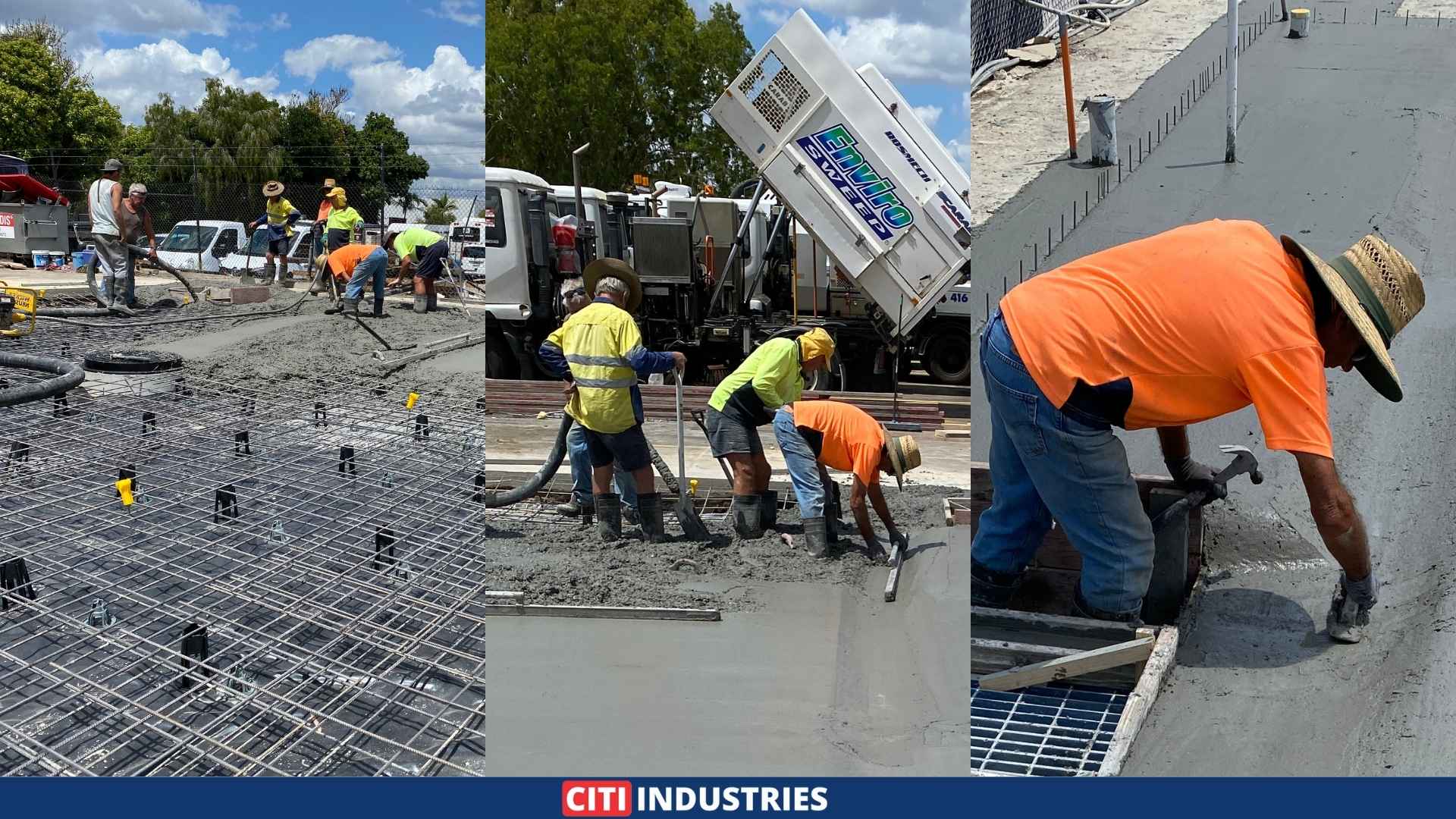
Soil is replaced, levelled and compacted to prepare for the concrete slab pouring. Concrete is pumped in and screeded off. A square raised concrete edge bunding is formed on the non-trafficable sides and a rolled concrete edge where vehicles will drive over to enter and exit the wash bay.

The bunded edge contains all washing water inside the wash bay. When the slab is fully cured, the above ground wash bay equipment can now be installed.

The water enters the Collection Pit and any large debris trapped by the grates and silt traps–that water then flows into the Holding Tank. When the water is at a certain level inside, the Diaphragm pump draws the water up from it into the Oil Water Separator which filters oils, grease, and dirt from the water and allows it to finally pass into the sewerage system.

The control box is installed, electrical wiring, commissioning and testing of the system is completed.

Now all the above ground equipment is finished, the system commissioned and operating correctly.

The clean up begins with a good wash down of the concrete slab and the fully trade waste compliant Wash Bay is now complete, ready to clean and maintain the whole transport fleet for the business and we handover our custom Operations & Maintenance manual so regular maintenance is completed to ensure continuous, trouble-free wash bay operation.

  • Page 1
  • Page 2
  • Go to Next Page »

Primary Sidebar

BROCHURE

Wash Bay Design
& Construct

OPEN & DOWNLOAD NOW

BROCHURE

Grease Trap
Supply & Install

OPEN & DOWNLOAD NOW

BROCHURE

Commercial
Plumbing

OPEN & DOWNLOAD NOW

BROCHURE

Hydraulic
Design

OPEN & DOWNLOAD NOW

Product categories

  • Hydraulic Design Products
  • Septic Tanks
  • Industrial and Commercial Grease Trap Products
    • Above Ground
    • Below Ground
  • Bollards
  • Safety Mirrors
  • Speed Humps
  • Wheel Stops & Chocks
  • Pumps Stations
    • Diaphragm Pumps
    • Sewer Pump Stations
    • Stormwater Pump Stations
  • Oil Water Separators

BROWSING HISTORY

  • 4000 LITRE VIKING PT ABOVE GROUND GREASE TRAP 4000 LITRE VIKING PT ABOVE GROUND GREASE TRAP
  • 10000L HALGAN BELOW GROUND GREASE TRAP CLASS B 10000L HALGAN BELOW GROUND GREASE TRAP CLASS B
  • 750 LITRE VIKING ABOVE GROUND GREASE TRAP 750 LITRE VIKING ABOVE GROUND GREASE TRAP

INFORMATION

  • About Us
  • Contact Us

SEE HOW WE CAN HELP WITH YOUR PROJECT

  • This field is for validation purposes and should be left unchanged.

GIVE US A CALL

1300 002 484

MON-FRI | 7am – 6pm

Check out our Products
and Services

  • Wash Bays
  • Grease Traps
  • Plumbing

Home

  • About
  • Case Studies
  • Grease Traps
  • Blog
  • Wash Bays
  • Contact Us
  • Plumbing

MY ACCOUNT

  • Security Policy
  • Privacy Policy
  • Returns Policy
  • Conditions of Use

We Accept

LET’S CONNECT

  • Facebook
  • Twitter
  • Instagram

PO Box 1449, Coorparoo QLD 4151
1300 002 484
© CitiIndustries.com.au | All Rights Reserved | Sitemap

Our Spring Sale Has Started

You can see how this popup was set up in our step-by-step guide: https://wppopupmaker.com/guides/auto-opening-announcement-popups/

Get the latest
free ebook

brochure title here


  • This field is for validation purposes and should be left unchanged.

Privacy Policy

  • This field is for validation purposes and should be left unchanged.
  • SUBMIT YOUR ENQUIRY AND WE WILL RESPOND SHORTLY

  • If you prefer you can call us on 1300 002 484 Mon-Fri 7am-6pm