Industrial sites that operate vehicle wash pads cannot afford to cut corners on waste water management. Wash pad runoff containing oils, hydrocarbons, silt, and cleaning chemicals must be captured, treated, and discharged compliantly before it reaches the sewer or stormwater network. Without the right infrastructure in place, that runoff becomes an environmental liability and a regulatory problem that compounds every day it goes unaddressed.
That was the situation at an industrial vehicle maintenance facility in Carole Park, Queensland. The site needed a complete wash bay drainage system installation built from the ground up, one that could capture wash pad runoff, retain and settle waste water, process it through an oil water separator, and connect compliantly to the approved sewer. Nothing existed on site. Everything had to be designed, excavated, installed, and commissioned as a single integrated system.
Citi Industries was engaged to deliver exactly that.

Project Overview
This was not a single-component installation. The facility required a fully integrated vehicle wash bay waste water system covering collection, retention, treatment, automated control, and sewer connection, all working together as one compliant and operational system.
The scope was substantial. Ground preparation and earthworks had to be completed before any tanks or pits could be installed. Trade waste pipework had to connect every component in the correct sequence. The oil water separator had to be configured to process waste water from the holding tank before treated water was discharged to the sewer. And a control panel had to automate the entire operation so the system could run without constant manual intervention.
Key project objectives included:
- Installation of a 600mm collection pit with lift out silt basket and Class D grate to capture wash pad runoff
- Installation of a 5,000 litre concrete holding tank with Class D sealed lid for waste water retention and silt settling
- Oil water separator installation – a 3,000 litre OWS package with 2,280 litre per hour diaphragm suction pump and control float switch
- X3 control panel installation to automate and manage system operation
- All earthworks and ground preparation for tanks and pits
- Trade waste plumbing installation connecting all tanks and pits
- Sewer connection to the approved location in front of the existing sewer line
- Backfilling of all excavated areas with basic compaction
- Removal of excess spoil from site
- Installation of a 20mm RPZD backflow prevention valve on the pressure washer water supply
Challenges
Industrial vehicle wash pads generate a consistent stream of contaminated waste water. Every wash cycle produces oils, hydrocarbons, silt, and detergents, and operators cannot discharge any of these directly to the sewer or stormwater network without pre-treatment.
Queensland regulations require industrial vehicle maintenance operations to manage wash bay wastewater through approved pre-treatment systems before discharge. As the environmental guidelines for wash bay waste water outline, waste water from industrial operations must meet acceptable standards before it can enter the sewer network. For sites running regular vehicle washdowns, that means having a compliant wash bay waste water treatment system in place before operations begin.
At this facility, the absence of any dedicated infrastructure meant every wash cycle was generating unmanaged runoff with no compliant pathway to the sewer. The risk was real and the consequences of continuing without a system in place were significant.
Key issues the project had to resolve included:
- No dedicated collection system for wash pad runoff
- No holding capacity for waste water retention and silt settling prior to treatment
- No oil water separator to remove hydrocarbons and contaminants before sewer discharge
- No automated control system to manage waste water processing
- No approved sewer connection for treated waste water discharge
- No backflow prevention on the pressure washer water supply
Site Preparation and Earthworks
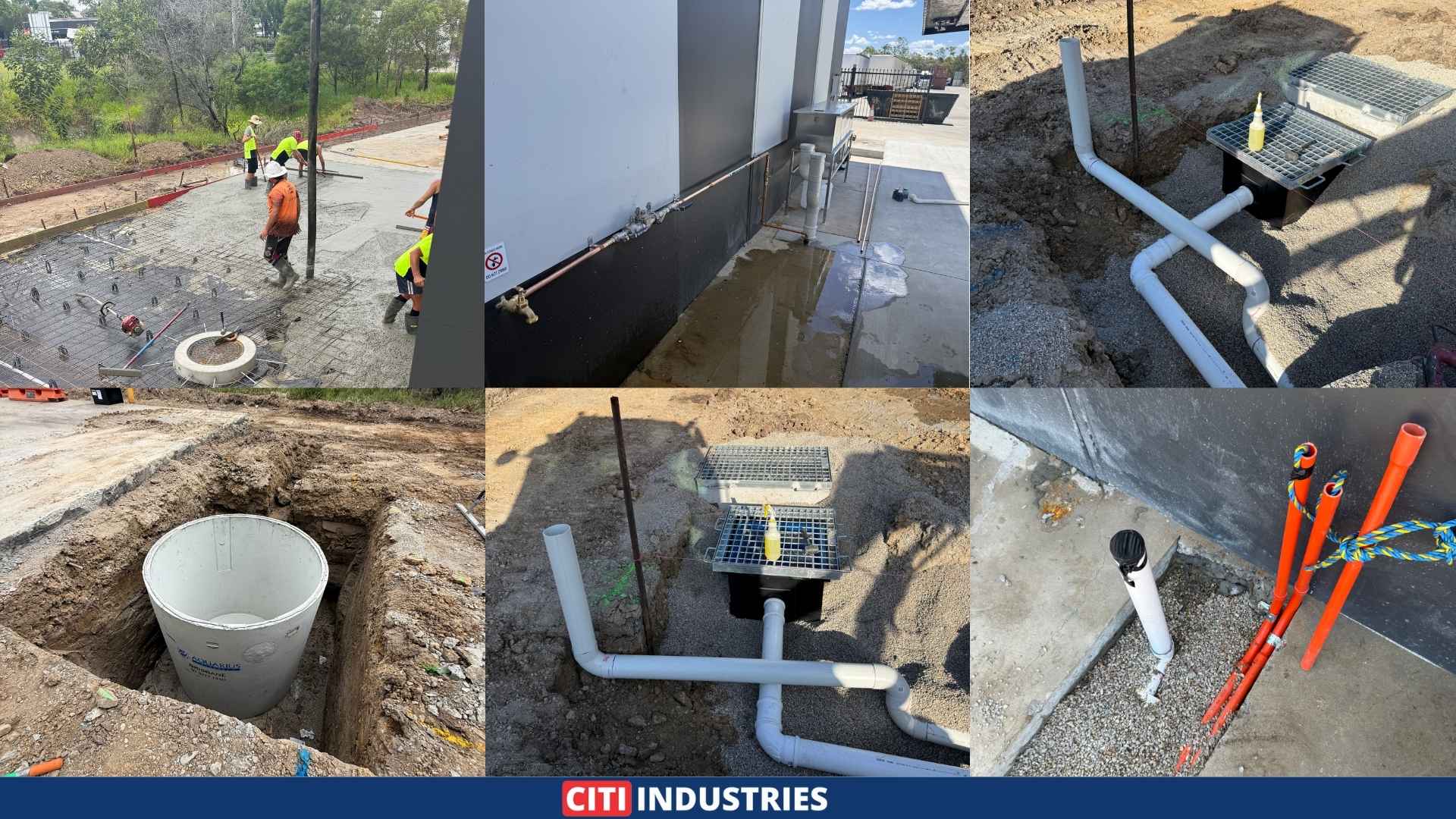
Before installing any tanks, the team prepared the site. Citi Industries completed all earthworks to excavate and level the installation areas for the collection pit, holding tank, and oil-water separator. After installing and connecting all components, the team backfilled and compacted all excavated areas. They also removed any excess spoil from the site. The team scheduled concrete finishing separately as a follow-on trade to finalise the surface areas around the installed infrastructure.

What Was Delivered
Citi Industries delivered a fully integrated vehicle wash bay waste water system covering every stage of the waste water management process from collection through to treated sewer discharge.
Collection Pit
Citi industries licensed plumbers installed a 600mm collection pit at the wash pad to capture surface runoff at the source. The pit includes a lift-out silt basket to intercept solids and debris before they enter the downstream system, along with a Class D grate rated for vehicular traffic loading. Additionally, this setup enhances system protection and ensures long-term durability under heavy use. Intercepting solids here protects the holding tank and oil water separator from premature fouling and extends the service life of the whole system.
5,000 Litre Concrete Holding Tank
The team installed a 5,000-litre concrete holding tank to receive wastewater from the collection pit. The tank features a Class D sealed lid and provides the retention volume required for silt to settle before pumping the wastewater through to the oil-water separator for treatment. As a result, giving silt time to settle at this stage significantly improves separator performance and reduces maintenance frequency across the system.
Oil Water Separator Installation
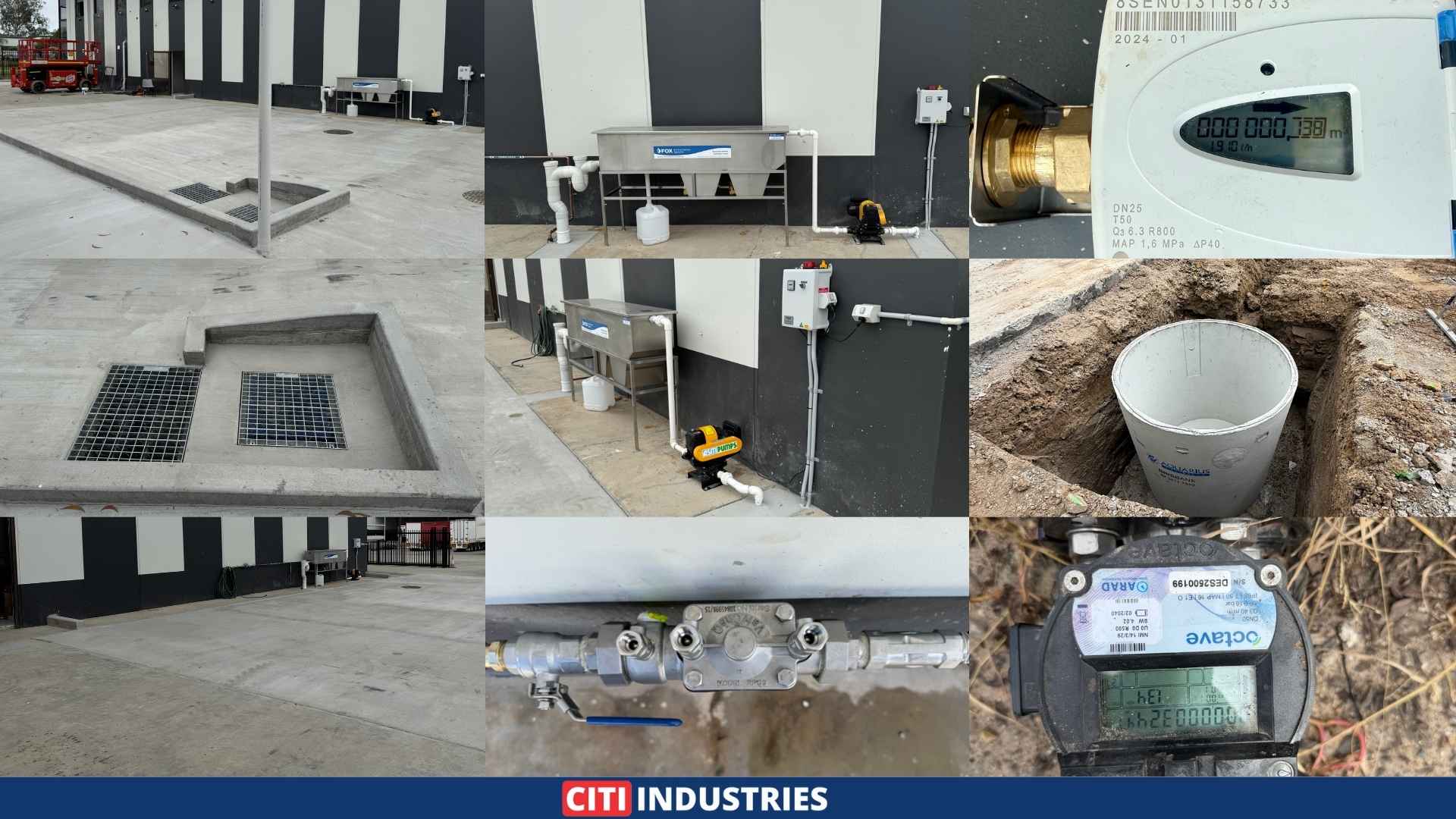
The 3,000 litre oil water separator installation is the centrepiece of the system. The system includes a 2,280-litre-per-hour diaphragm suction pump and a control float switch. It processes wastewater pumped from the holding tank, removes hydrocarbons, oils, and residual contaminants, and discharges treated water to the approved sewer connection point.
Oil water separators are a mandatory pre-treatment requirement for industrial vehicle wash bay operations where runoff contains petroleum-based contaminants. All hydraulic and drainage works associated with the installation were delivered in line with the oil water separator waste water treatment standards outlined in the Australian plumbing and drainage standards, which set minimum requirements for compliant industrial wash bay plumbing and drainage systems across commercial and industrial facilities in Australia.
Control Panel and System Automation
Citi Industries team installed an X3 control panel to automate the operation of the entire wastewater system. The panel manages the pumping and processing cycle based on waste water levels, ensuring the system operates consistently without requiring manual monitoring throughout the day. For a busy industrial facility running regular vehicle washdowns, automated system control is not a luxury. It is what makes the system practical to operate at scale.
Trade waste Pipework and Sewer Connection
All trade waste plumbing installation works were completed to connect the collection pit, holding tank, and oil water separator through to the approved sewer connection point in front of the existing sewer line. The team made every connection in the correct sequence to ensure wastewater flows correctly through each stage of the treatment process before reaching the sewer. As a result, the system maintains efficient and compliant wastewater flow throughout each stage.
Backflow Prevention
The team installed a new 20mm RPZD backflow prevention valve on the water supply connected to the pressure washer. This protects the facility’s potable water supply from contamination in the event of a pressure reversal in the system and ensures compliance with Queensland plumbing regulations for industrial drainage solutions connected to pressurised water supply lines.

Final Outcome
The project was completed in line with the defined scope, delivering a purpose-built wash bay drainage system installation that gives the facility a fully compliant, automated, and reliable pathway for managing wash pad waste water from collection through to treated sewer discharge.
With the new system in place, the facility now benefits from:
- Automated system control via an X3 control panel, reducing the need for manual intervention
- Effective separation and treatment of waste water through a dedicated oil-water separator
- Improved environmental compliance with a fully integrated trade waste and sewer connection
- Reliable containment and management of runoff with purpose-built collection and holding capacity
For industrial vehicle maintenance facilities, the risk of operating wash pads without a compliant waste water system is not abstract. Contaminated discharge reaching the stormwater network or sewer without pre-treatment can trigger enforcement action under Queensland’s environmental protection framework, result in significant fines, and in serious cases lead to operational shutdowns. Building the right system properly from the start is the most cost-effective way to manage that risk.
Partner With Citi Industries for Your Next Wash bay Project
If your site is running vehicle wash pad operations without a purpose-built waste water system, every wash cycle is generating risk. Whether you need a collection pit, holding tank, oil-water separator, or a complete end-to-end system built from the ground up, Citi Industries has the experience to deliver it without disrupting your operations. Moreover, the team ensures a seamless installation process while maintaining operational continuity.
- View our industrial washbay drainage systems to see how we design and deliver compliant end-to-end wash bay infrastructure.
- Explore our oil water separator installation services and find the right pre-treatment solution for your site’s waste water volumes.
- Learn more about our trade waste drainage installation and how we connect wash bay systems to approved sewer networks across Queensland.
Call us on 1300 002 484 Monday to Friday, 7am to 6pm, or send us your details online and we will take it from there.


 1300 002 484