When several food tenancies shared one building, a single grease trap had to carry them all. A commercial real estate manager in Burleigh Heads found the old unit could no longer keep up. The existing 2000-litre trap was undersized for the shops it served, so the building needed far more capacity.
For that reason, the manager engaged Citi Industries for a commercial grease trap installation. The plan was to triple the capacity and reroute drainage to every shop that required it.
Project Overview
This commercial grease trap installation swapped a 2000-litre unit for a 6000-litre below ground trap. Because the building housed multiple tenancies, the new trap had to serve each shop along the rear. Therefore, the drainage layout mattered as much as the tank itself.
The scope ran from decommissioning the old unit through to reinstating the concrete. It covered excavation, the new trap, trade waste drainage to each doorway, venting, and backflow protection.
Key scope items included:
- One 6000-litre below ground grease trap with Class D vehicular traffic lids
- Pump-out and decommissioning of the existing 2000-litre grease trap
- Backfilling and compacting over the old decommissioned unit
- Concrete scanning, cutting, removal, and replacement across the work area
- Trade waste drainage run along the rear of the building to each shop doorway
- The grease trap outlet connected to the sewer
- A 100mm vent to atmosphere for both the trap and the trade waste drain line
- One 15mm RPZD backflow valve on the closest hose tap for washdown
- Pedestrian barricading and full concrete reinstatement over the new trap

Challenges
Several kitchens feeding one trap produced a heavy, constant load of fats and oils. When the tank is too small, it fills fast and risks blockages or breaches. Under Urban Utilities trade waste guidelines, a shared trap must be sized for the total flow it carries.
Capacity drove the whole project. Moving from 2000 litres to 6000 litres meant a far larger tank and a much bigger excavation. As a result, the team planned the dig, the lift, and the lids around a unit three times the old size. The Class D lids were essential, since the rear area carried vehicle traffic.
Routing the drainage added complexity. Each shop doorway that needed a connection had to tie into the one new trap along the rear.
Key constraints on this project:
- The old 2000-litre trap was undersized for a multi-tenancy building
- A 6000-litre replacement required a much larger excavation and lift
- Class D lids were needed for a rear area open to vehicle traffic
- Drainage had to reach each shop doorway from a single shared trap
- A washdown tap was required within 5 metres of the new grease trap

Solutions
Citi Industries staged the upgrade to retire the old trap and bring the larger one online cleanly. Each phase below is built on the last.
Decommissioning the Old Trap
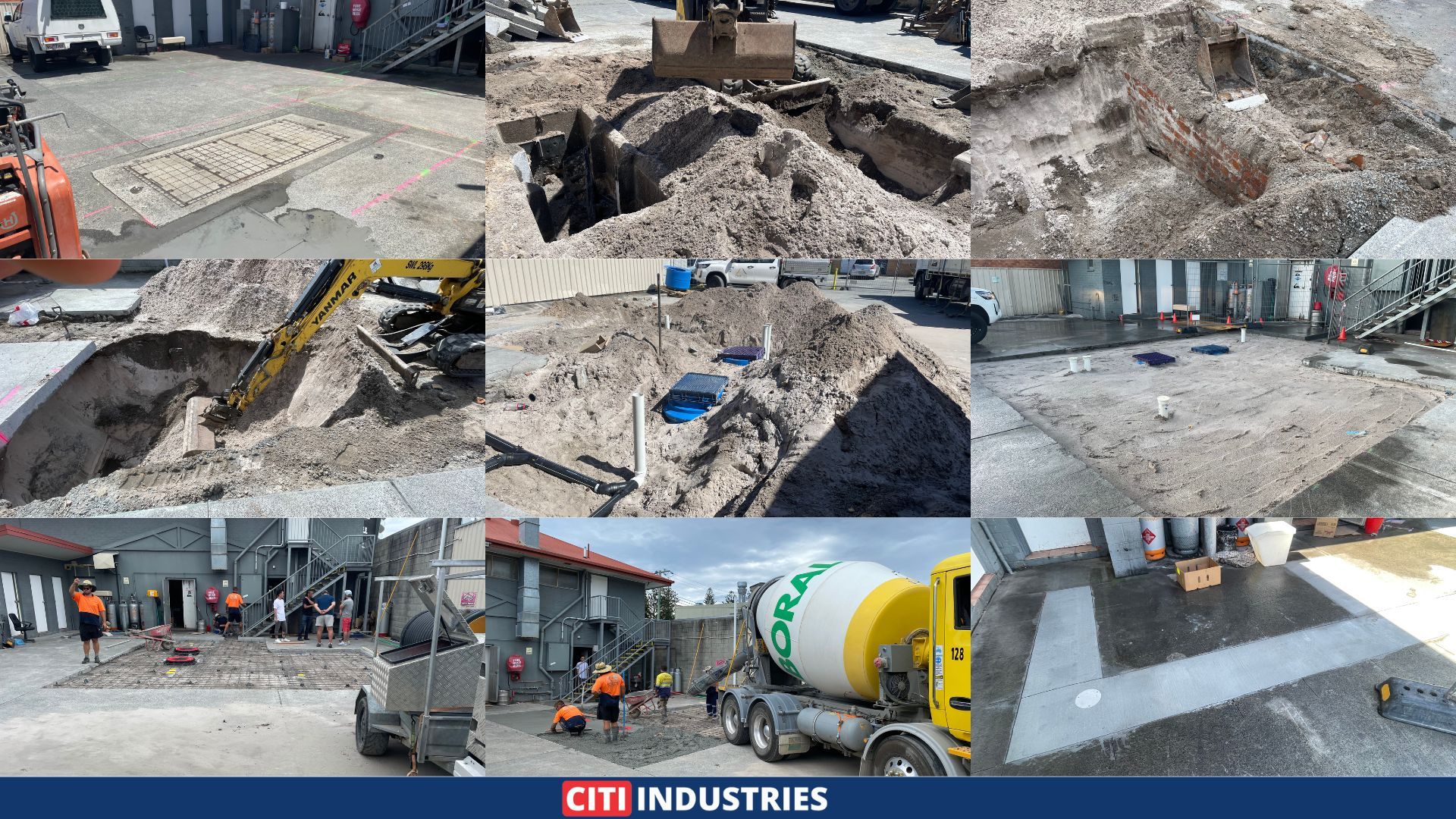
To begin, the existing 2000-litre trap was pumped out and decommissioned. Rather than remove the empty shell, the team backfilled and compacted over it in place. This approach avoided needless excavation while taking the old unit fully out of service.
Clearing it this way sets a stable base for the works around it. Subsequently, attention turned to the new tank’s position.
Excavating and Setting the 6000-Litre Tank
Next, the crew scanned the concrete, then cut and removed it to open the excavation. A grease trap is a below ground chamber that intercepts fats and oils before they reach the sewer. At 6000 litres, this one holds enough to serve a row of busy kitchens.
The team set the tank with Class D lids, rated for the vehicle traffic across the rear. Our below ground grease traps range covers exactly this kind of high-capacity job.
Drainage to Each Shop and Sewer Connection
Then came the drainage that made the trap useful to every tenant. The crew ran trade waste lines from the new trap along the rear of the building to each required doorway. After that, they connected the trap outlet to the sewer.
Both the trap and the drain line received a 100mm vent to the atmosphere. Venting clears gas and stops odour, which keeps a shared system stable. The work followed Queensland regulated plumbing work requirements throughout.
Backflow Protection and Reinstatement
Finally, the team fitted a 15mm RPZD valve on the closest hose tap. That tap serves washdown duties and must sit within 5 metres of every new grease trap. An RPZD stops contaminated water flowing back into the mains supply.
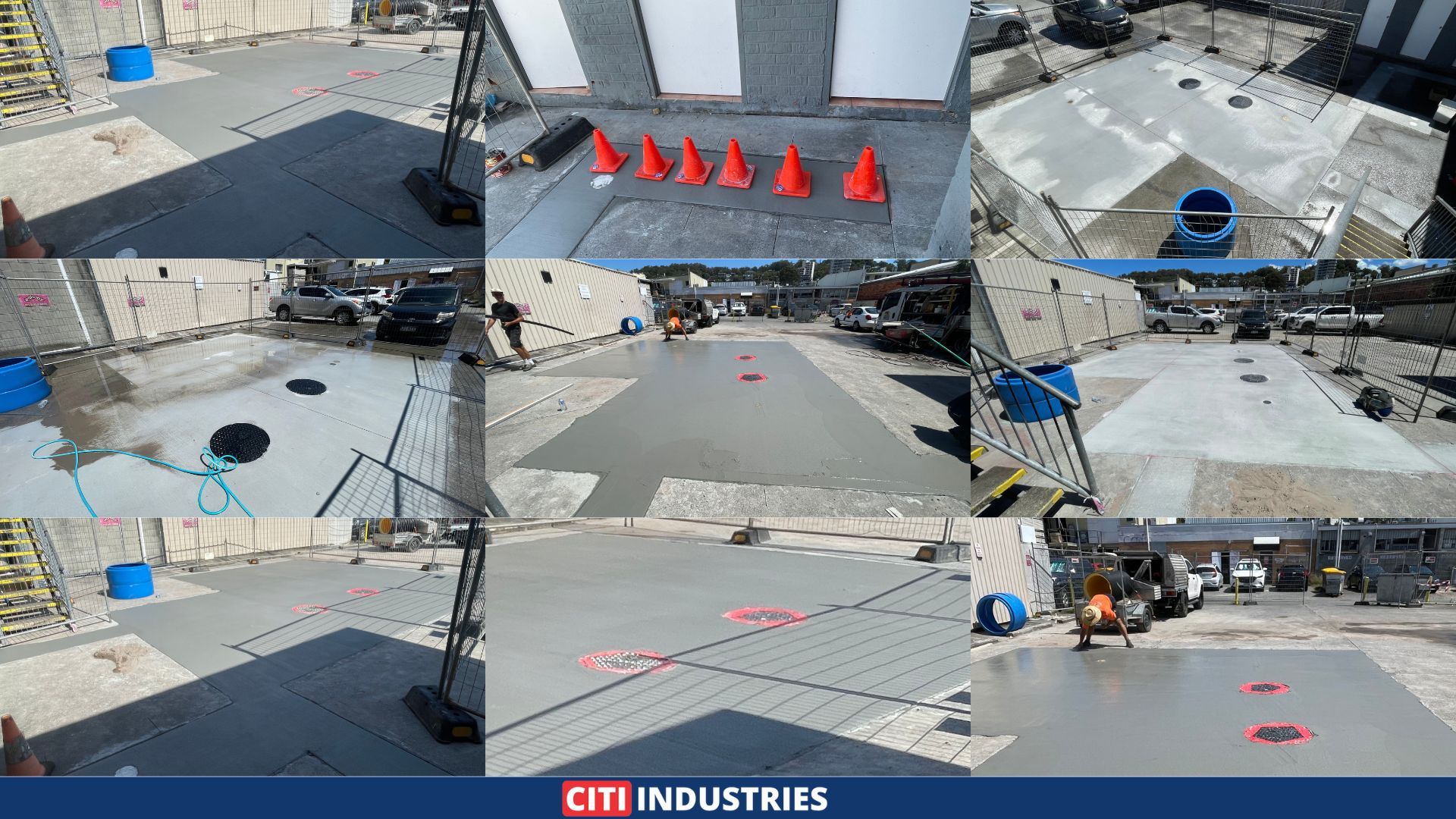
To close out, the crew reinstated all the concrete, including the surface over the new trap. Our grease trap design and installation work always finishes with a clean, restored surface.

Final Outcome
A building held back by an undersized trap now runs on triple the capacity. Citi Industries completed the Burleigh Heads installation in December 2025 with the rear area barricaded and safe. As a result, every connected shop discharges to a trap built for the combined load.
- A 6000-litre below ground trap replaced the undersized 2000-litre unit
- Class D lids matched the vehicle traffic across the rear of the building
- Trade waste drainage reaches each shop doorway from one shared trap
- An RPZD washdown tap sits within 5 metres of the new trap, as required
Because the build met plumbing compliance and standards Australia, the property holds infrastructure the tenants can rely on. The reinstated concrete leaves the rear looking finished rather than dug up.
Final Thoughts
Shared trade waste is easy to underestimate until the trap starts overflowing. A multi-tenancy building needs capacity sized for every kitchen at once, not just one. However, the right upgrade removes that risk for years.
Citi Industries sizes each grease trap to the real load, not the bare minimum. Because of that, property managers avoid the breaches and callbacks that undersized traps invite. The team retires the old unit, sets the new one, and routes drainage to every tenancy that needs it.
If you manage a building where the trap struggles to keep up, the team can assess it. Request a site assessment and we will size the upgrade and plan the drainage to suit every tenancy.
Call Citi Industries on 1300 002 484 to discuss your project.


 1300 002 484