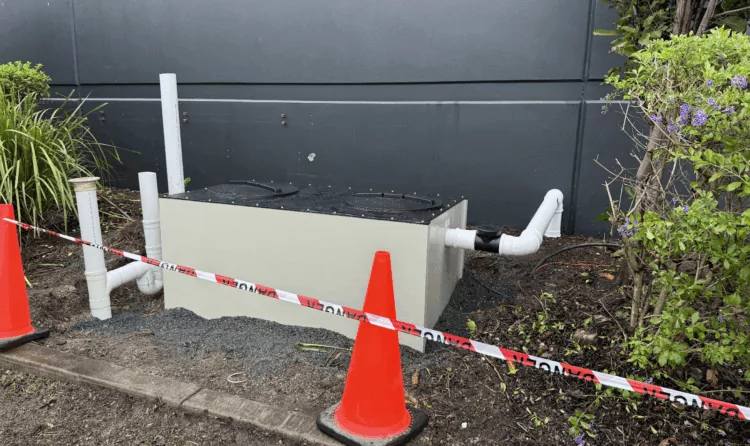

If you have a restaurant, café or any food-related business, you are probably familiar with grease traps. This vital plumbing device traps fats, oils and grease (in short, FOG), ensuring that they do not flow into your wastewater system. Such a practice benefits both your plumbing and the environment.
Yet before having a grease trap installed, it is important to know what it entails. Proper installation of a grease trap not only allows your business to comply with the regulations established by the local council but also makes the operation smooth and efficient. Among other things, it means that the trap will be of an appropriate size and that cleaning will be done as scheduled.
1. Knowing what a grease trap is for
A grease trap (sometimes called a grease interceptor) is a plumbing device that prevents grease and sediments from entering the sewer system. When wastewater from sinks and dishwashers passes through, lighter oils and fats rise to the top, and particles settle to the bottom. This leaves just water to go through to the sewer.
FOG can build up in pipes and cause blockages, smells, and expensive plumbing problems if a trap isn’t placed correctly.
2. Why a grease trap is essential for businesses
For most food service businesses, putting in a grease trap isn’t just a good idea; it’s the law. Local water authorities make rules for businesses like restaurants, cafés, bakeries, and catering kitchens about what to do with their trade waste.
If you don’t install or take care of your grease trap, you could get fined, have to shut down, or hurt the environment. A compliant system helps you:
- Stop expensive plumbing problems.
- Follow health and environmental rules.
- Keep up excellent relationships with the water authority and local councils.
- Avoid unpleasant odours and operational issues.
3. Know the rules and permits in your area
Before installing a grease trap, it is best to consult with the local council and water authorities to determine your specific requirements. Each locality has its own regulations regarding:
- The trap’s size will be based on the kitchen’s size and the volume of waste produced.
- Zones for installation (ex: inside or outside)
- Frequency of garbage collection and disposal
- Plumbing compliance certificates
Partnering with experts such as Citi Industries guarantees that your installation is compliant with all Australian Standards and the environmental rules.
4. Picking the right size and type of grease trap
The size of the grease trap you choose is one factor that directly determines its performance. If you size it too small, it will either overflow or require constant cleaning. However, if you size it more than required, its installation and maintenance may turn out to be more expensive than necessary.
A few typical examples are:
- Under-sink grease traps are ideal for very small cafés or food trucks.
- In-ground grease traps are effective for larger restaurants and commercial properties.
- Automatic grease removal systems are designed for high-volume customer businesses.
A professional assessment can help you choose the best option that suits your business size, kitchen layout, and wastewater flow rate.
5. Proper installation is key
A grease trap installation requires connecting the kitchen wastewater lines to the trap and ensuring the flow rates and venting are all correct.
If you don’t install it correctly, it can become clogged or leak excessively.
Citi Industries is an expert in installing grease traps that comply with Australian plumbing and environmental regulations. The team makes sure that your system is set up correctly, checked for leaks, and ready for a compliance inspection.
6. Regular maintenance is a must
It’s just the beginning when you install a grease trap; frequent cleaning is required to ensure its function. The frequency of cleaning and/or trapping should be every month to three months, depending upon the traffic in your establishment.
If you neglect maintenance, you could experience:
- Pungent odors
- Spillage and wastewater backing up
- Urgent yet expensive plumbing repairs
Citi Industries provides professional services for the cleansing, examination, and disposal of waste, all of which are conducted in accordance with local environmental regulations.
7. The cost of setting up and running
The size, type, and location of a grease trap all affect the cost of installation. Smaller ones that fit under the sink can cost a few hundred dollars, while bigger commercial systems can cost thousands of dollars.
You should also plan for regular cleaning and maintenance, as this is essential for saving money in the long run and ensuring compliance.
8. Working with the right experts
Working with a service that has been around for a while will provide you with peace of mind from start to finish. We at Citi Industries offer:
- Professional evaluation and sizing of sites
- Help with getting council permission
- Installing things well with long-lasting materials
- Cleaning and maintenance services that are planned
With professional help, your grease trap will work well, safely, and in complete compliance.
Final Thoughts
Knowing all regulations, technical aspects and cleaning before the installation of a grease trap is a must. This not only protects your company against costly penalties but also assures that your activities are not harmful to the environment.
Citi Industries can assist you with installation that is in accordance with regulations and routine maintenance that keeps your premises clean, efficient, and compliant.
Key Takeaway
Installing a grease trap is a wise decision that will secure the future of your business. With assistance from Citi Industries, ensure that the entire process is correct from the very beginning.


 1300 002 484