Plumbing rules tighten over the decades, and infrastructure that once passed can quietly fall out of step. A meat processing factory in Morningside faced exactly that with its overflow relief gully. The existing ORG met the standards of its build era, yet it no longer satisfied current plumbing regulations.
Because of this, the factory engaged Citi Industries to design and install a compliant replacement. The job demanded precise depth work, careful excavation, and a council sign-off at the end.
Project Overview
This overflow relief gully installation replaced a non-compliant unit at a working factory. The core challenge was depth, since an ORG only protects a building when it sits low enough in the system. Therefore, the team planned the new sewer run around one exact target level.
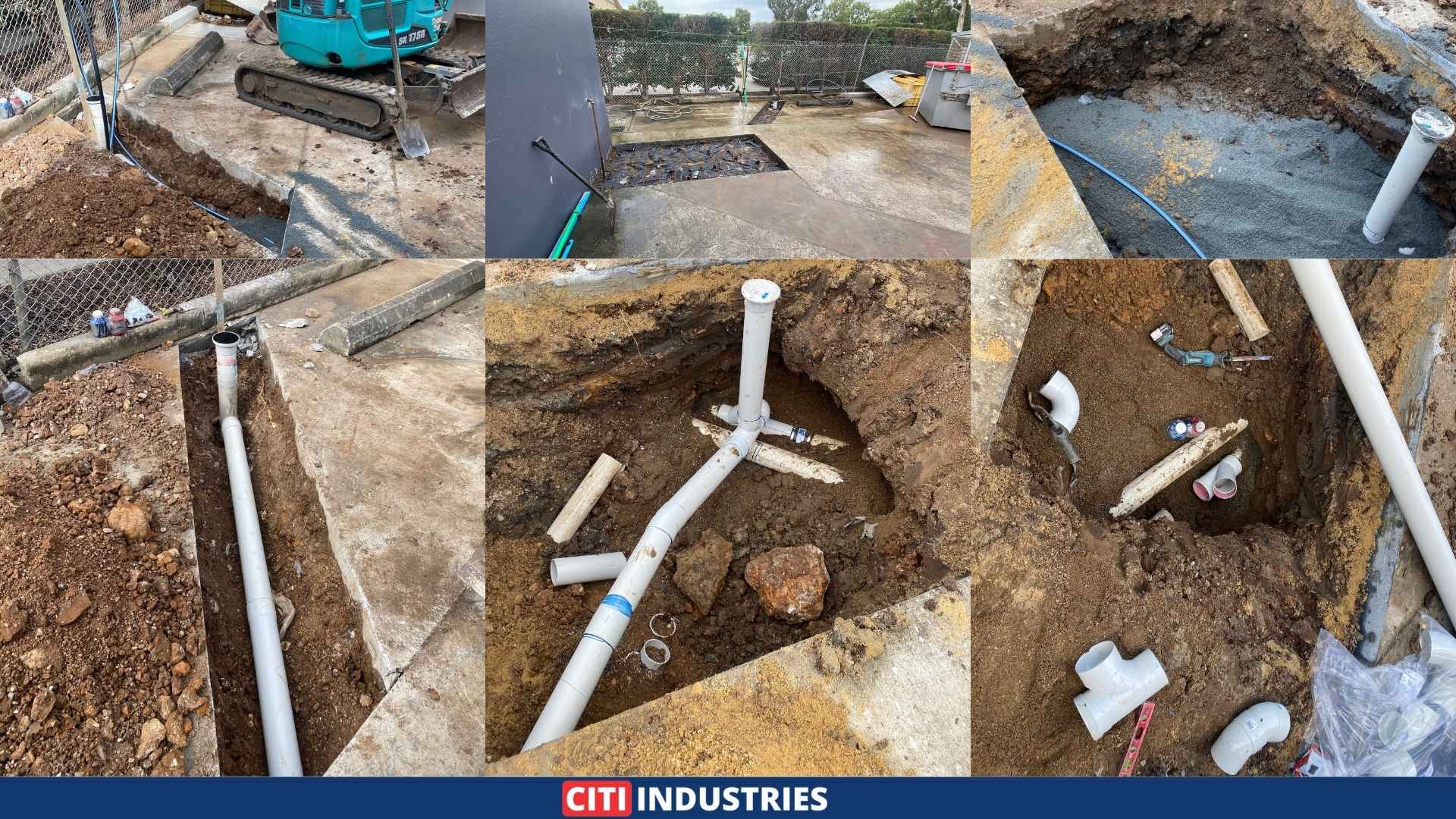
The scope reached well past the gully itself. It took in concrete cutting, excavation, a new sewer line, a bollard-mounted hosetap, full reinstatement, and a council inspection.
Key scope items included:
- Replacement of the existing non-compliant ORG with a new compliant unit
- Concrete scanning to locate all below-ground services before cutting
- Concrete cutting from the far right front of the factory across to the fence
- Excavation to the sewer line, with a new line run diagonally to the fence
- A new ORG set with a finishing collar and grate at the required depth
- A new bollard-mounted hosetap positioned above the ORG grate
- Backfilling, spoil removal, and preparation for fresh concrete
- Steel dowels and mesh drilled into the existing slab before the pour
- New concrete to the trenches, a full site clean, and one council inspection
Challenges
An overflow relief gully is a grated outlet that sits outside a building. When a sewer blockage builds pressure, the grate lifts and releases the surcharge outdoors rather than inside. According to the QBCC overflow relief gully requirements, the gully must sit at a set level to work safely.
Depth was the defining problem on this site. The new overflow point had to reach close to 225mm below the internal floor level. To pin that down, the team took laser measurements across the area. They found a point roughly 4m from the building corner sitting around 220mm below the internal floor.
Reaching that depth meant running a new sewer line diagonally to the fence. Meanwhile, the old slab hid live services, so scanning had to come before any cut.
Key constraints on this project:
- The new ORG had to sit close to 225mm below the internal floor level
- Laser measurement was needed to confirm the exact achievable depth on site
- A diagonal sewer run to the fence was required to reach that depth
- Concrete scanning preceded all cutting to protect buried services
- The completed drainage work required a formal council inspection

Solutions
Citi Industries worked the job from survey through to council sign-off. Each stage below built toward a compliant, lasting result.
Scanning, Cutting and Setting the Levels
To begin, the crew scanned the concrete to map every service below the slab. With the ground confirmed safe, they cut from the far right front of the factory across to the fence. Laser readings then set the target depth, since the ORG fails its purpose if it sits too high.
This kind of survey-led groundwork underpins our industrial drainage solutions, because guesswork has no place near live sewer lines.
Running the New Sewer Line
Next, the team excavated down to the existing sewer. To achieve the required fall and depth, they ran a new line diagonally across to the fence. That diagonal route was the key to hitting roughly 220mm below the internal floor at the chosen point.
Getting this right matters under Queensland regulated plumbing work requirements. An ORG set at the correct level lets a surcharge escape outdoors, which shields the factory interior from sewage backup.
Setting the ORG and the Bollard Hosetap
After the line was in, the crew set the new ORG with its finishing collar and grate. They then ran a water line across from the existing hosetap on the right-side corner. A fresh hosetap went onto a new bollard fixed into the ground, positioned directly above the ORG grate.
That hosetap placement is not optional, since a water point above the grate is required as part of any ORG installation. Our commercial plumbing services build these compliance details in from the start.
Reinstatement and Council Inspection
Finally, the team backfilled the trenches and carted the excess spoil off site. To bond the new slab to the old, they drilled steel dowels and mesh into the existing concrete. Fresh concrete then filled the trenches, followed by a full site clean.
To close the job properly, Citi Industries arranged one council inspection for the drainage work. That sign-off confirmed the new ORG met current standards.
Final Outcome
A factory that carried an outdated overflow point now holds a fully compliant ORG. Citi Industries completed the Morningside works in December 2025 and passed the council inspection. As a result, the building gained proper protection against sewer surcharge.
- New ORG set close to 225mm below the internal floor, as the standard requires
- Diagonal sewer run delivered the depth the old layout could not
- Bollard hosetap installed above the grate to meet ORG installation rules
- Drainage work inspected and signed off by the council
Since the build followed plumbing compliance and standards Australia, the factory holds infrastructure that suits its current obligations. The reinstated concrete leaves the work zone clean and finished.
Next Steps
Compliance is not a fixed line, because regulations move and older buildings drift behind them. An ORG that passed on build day can become a liability years later. However, a well-planned replacement brings the site back into step without guesswork.
Citi Industries treats drainage compliance as a precision task, not a rough dig. When depth decides whether a system works, laser-set levels remove the doubt. The team scans first, builds to the standard, and arranges the inspection that proves it.
If your site runs older drainage that may no longer comply, the team can assess it. We provide trade waste plumbing installation, ORG upgrades, and the council liaison a clean handover needs.
Call Citi Industries on 1300 002 484 to discuss your project.


 1300 002 484